August 19, 2026
Executing a successful structural tear-down demands an uncompromising commitment to rigorous hazard prevention and site management. Demolition projects present substantial physical hazards, ranging from unstable concrete slabs and heavy airborne debris to hidden utility lines and toxic environmental contaminants. Contracting certified demolition companies ensures that every phase of structural removal proceeds under strict regulatory oversight and advanced security protocols. Professional crews evaluate load-bearing components, implement protective perimeters, and utilize specialized machinery to eliminate operational hazards systematically. Prioritizing site safety safeguards field workers, protects adjacent residential properties, and prevents catastrophic environmental accidents, making certified expertise essential for managing high-risk teardown operations effectively.
Assessing the Industry Growth and Market Expansion Dynamics
As urban environments evolve, the demand for certified site preparation and structural removal services continues to expand rapidly across the nation. According to IBISWorld, the U.S. Demolition and Wrecking industry reaches a market size of $11.3 billion in 2026. This significant economic activity highlights the vital role that professional teardown specialists play in modern commercial and residential redevelopment. Hiring established demolition companies guarantees that large-scale clearing projects adhere strictly to evolving federal safety guidelines and municipal building codes. Understanding these industry dynamics reassures property developers that partnering with credentialed contractors minimizes financial liabilities while ensuring smooth, secure project execution.
Conducting Comprehensive Environmental Inspections and Risk Assessments
Before heavy machinery enters an active job site, certified specialists perform exhaustive structural and environmental risk assessments to identify potential hazards. Structural engineers examine load-bearing walls, foundation integrity, and adjacent soil conditions to prevent premature building collapse during tearing down operations. Additionally, certified demolition companies test aging building materials for toxic substances like asbestos, lead paint, synthetic mineral fibers, and hazardous chemical residue. Identifying hidden environmental risks beforehand enables contractors to formulate precise containment plans, ensuring hazardous substances are abated safely without contaminating surrounding soil, local waterways, or adjacent neighborhood living spaces.
Securing Municipal Permits and Enforcing Regulatory Compliance
Navigating the complex maze of municipal permits and safety regulations requires extensive legal knowledge and administrative experience. Credentialed demolition companies coordinate directly with city building officials, environmental protection agencies, and occupational safety boards to secure necessary permits before work begins. Specialists ensure full compliance with regional noise restrictions, dust control mandates, traffic management guidelines, and public safety regulations throughout active tear-down operations. Managing these administrative requirements prevents project delays, eliminates expensive civil fines, and protects property owners from legal disputes, providing clear documentation that all site clearance activities meet strict municipal standards.
Disconnecting Utilities Safely and Preventing Unexpected Pipeline Accidents
Striking active gas mains, high-voltage electric cables, or municipal water lines creates severe life-threatening hazards for field workers and nearby residents. Experienced demolition companies coordinate closely with municipal utility providers to locate, shut down, and properly cap all underground utility connections before physical teardown work commences. Professional crews verify that electric meters are removed, gas feeds are isolated, and water lines are secured to prevent accidental explosions, fires, or flooding. Systematic utility management eliminates dangerous surprises during excavation, ensuring field operators maneuver heavy equipment safely without risking utility disruptions across surrounding neighborhoods.
Utilizing Advanced Heavy Equipment and Specialized Mechanical Attachments
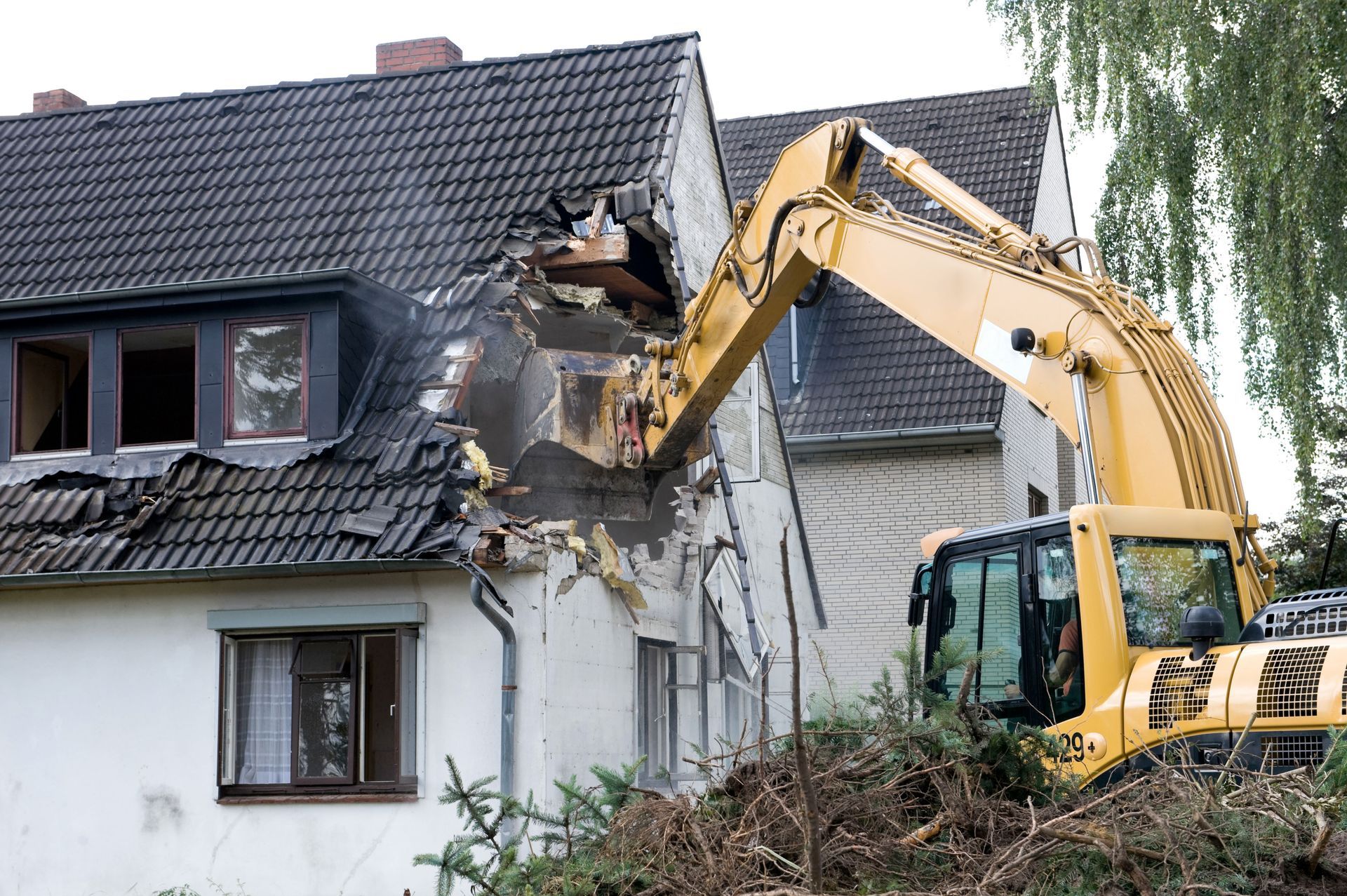
Modern structural tear-down projects rely heavily on specialized machinery engineered to execute high-precision dismantling with minimal physical risk. Reputable demolition companies deploy modern excavators equipped with hydraulic shears, concrete pulverizers, high-reach booms, and magnetic sorters to dismantle structures systematically from top to bottom. Using specialized mechanical attachments allows machine operators to crush reinforced concrete, cut heavy steel beams, and lower structural elements safely within controlled fall zones. Advanced machinery minimizes manual labor hazards, protects equipment operators inside reinforced cabs, and accelerates project timelines while maintaining absolute mechanical control over collapsing materials.
Implementing Rigorous Personal Protective Equipment Protocols
Field personnel working on structural tear-down sites face continuous exposure to falling debris, sharp materials, loud machinery noise, and airborne dust particles. Certified demolition companies enforce strict Personal Protective Equipment protocols, requiring all on-site personnel to wear hard hats, steel-toe boots, eye protection, high-visibility vests, and respiratory protection. Specialists receive continuous safety training on hazard communication, emergency evacuation procedures, and heavy machinery blind spots. Enforcing rigorous personal safety standards minimizes workplace injuries, prevents chronic respiratory illnesses, and fosters a safety-conscious operational culture where field workers perform complex tasks efficiently and safely.
Suppressing Airborne Dust and Managing Environmental Noise Pollution
Crushing concrete and tearing down drywall generates massive clouds of fine silica dust that endanger workers' lungs and degrade local air quality. Environmentally responsible demolition services deploy industrial dust suppression systems, utilizing high-pressure water foggers, misting cannons, and hose crews to trap airborne particles before they drift into neighboring properties. Furthermore, contractors implement noise mitigation barriers and schedule heavy mechanical operations during designated daytime hours to minimize community disruptions. Managing airborne dust and acoustic emissions protects public health, preserves neighborhood air quality, and maintains positive community relations throughout active project lifecycles.
Handling Hazardous Material Abatement With Specialized Containment Tactics
Extracting hazardous substances like asbestos insulation, lead piping, or toxic mold requires specialized containment protocols to prevent cross-contamination. Qualified demolition services employ certified abatement technicians who build sealed negative-pressure containment zones using heavy plastic sheeting and HEPA air filtration units. Technicians wear specialized protective suits and respirators while carefully stripping, wetting, and double-bagging hazardous waste materials for secure transport. Utilizing strict abatement procedures isolates toxic particles completely, preventing hazardous dust from escaping into surrounding neighborhoods and ensuring that dangerous waste is disposed of safely at licensed environmental facilities.
Recycling Waste Materials and Minimizing Landfill Environmental Impacts
Modern structural clearing operations prioritize sustainable waste management by sorting demolished building materials for recycling and repurposing. Environmentally conscious demolition services separate crushed concrete, scrap metal, structural timber, brickwork, and copper wiring directly on site to divert heavy waste from regional landfills. Processed concrete is crushed into reusable gravel base for road construction, while structural metals are sent to scrap processing plants for melting. Implementing aggressive recycling strategies lowers landfill tipping fees, conserves natural resources, and minimizes overall environmental footprints, delivering cost-effective and eco-friendly site clearance solutions for forward-thinking developers.
Executing Final Site Grading and Ground Stabilization Procedures
Clearing above-ground structures represents only part of a comprehensive site preparation project needed for future building endeavors. Experienced demolition services extract deep concrete footings, basement walls, underground storage tanks, and foundation slabs to leave property grounds clean and stable. After removing underground debris, workers backfill empty excavations with clean, tested fill dirt and compact the soil thoroughly using heavy rollers. Final site grading establishes proper drainage slopes, preventing standing water accumulation and soil erosion. Executing precise ground stabilization leaves the property completely level, safe, and ready for immediate construction.
Preparing Comprehensive Emergency Response and Incident Management Protocols
Even under strict operational supervision, unexpected job site emergencies require immediate, organized response strategies to protect human life. Certified demolition services establish detailed emergency action plans before initiating field work, mapping out clear evacuation routes, emergency assembly areas, and first-aid stations. Field supervisors maintain direct lines of communication with local fire departments, emergency medical services, and municipal hospitals to handle accidental injuries or equipment failures swiftly. Conducting regular emergency drills keeps field personnel prepared for sudden hazards, minimizing response times and ensuring that critical medical support arrives quickly during unforeseen job site incidents.
Prioritizing safety throughout structural tear-down projects protects financial investments, human lives, surrounding neighborhoods, and natural environments alike. Partnering with certified demolition services delivers comprehensive project management covering risk assessments, municipal permits, utility disconnections, dust suppression, and hazardous material abatement. Professional specialists utilize advanced machinery, enforce strict personal protection protocols, and execute sustainable waste recycling to prepare pristine, building-ready properties. Relying on credentialed experts eliminates legal liabilities, prevents costly project delays, and ensures complete regulatory compliance. Investing in certified teardown specialists ensures peace of mind, delivering safe, efficient, and successful outcomes. Have you been seeking out professional demolition companies in the city of St. Louis and St. Louis County, MO? The demolition experts at Crete Doc are ready to assist! Call today to request an estimate for your next project.